
Everest 2026 – The Irish Update
According to the Himalayan Database, Everest has been climbed 13,737 times since the first ascent by Edmund Hillary and Sherpa Tenzing Norgay in 1953. The summit split is 9887 South (72% via Nepal) and 3850 North (28% via Tibet). Of the 13,737 summits to date, 48% were clients while 52% were guides. just 1.2% of summits were achieved without supplementary oxygen with 98.8% of those who reached the summit using bottled oxygen. The success rate for those attempting without oxygen is less than 5%. Last season saw 851 summits of Everest (731 via Nepal, 120 via Tibet) with 5 fatalities. This season is projected to break all records for permits and summits on the South side, helped by the fact that the Chinese have closed the North (Tibet) side to foreign climbers.
From an Irish perspective (North & South), Everest has been climbed 84 times by 65 Irish climbers (9 women, 56 men), with a total of 156 Irish attempts to date by 107 different climbers. A full list of all Irish climbers who climbed or attempted Everest can be found here. Climbing has a long and proud tradition as a cross-community activity in Ireland, and so we honour that tradition by including all climbs from North and South in our data and insights.
So far we are aware of 11 Irish climbers attempting Everest this Spring, across 5 different expedition teams:
– Robert Smith (Tyrone)
– Andy Nolan (Cork)
– Philip Collins (Limerick)
– Diarmuid Morrissey (Westmeath)
– Sarah Armstrong (Armagh)
– Jason Black (Donegal)
– Adam Sweeney (Waterford)
– Padraig O’Hora (Mayo)
– Eanna McGowan (Dublin)
– Frank McCarthy (Kerry)
– Tom Walsh (Galway)
This total matches the largest number of Irish ever attempting Everest in a single season, joined with 2003 and 2007. Click below to view a brief bio on each of the 11 Irish climbers attempting Everest this Spring.
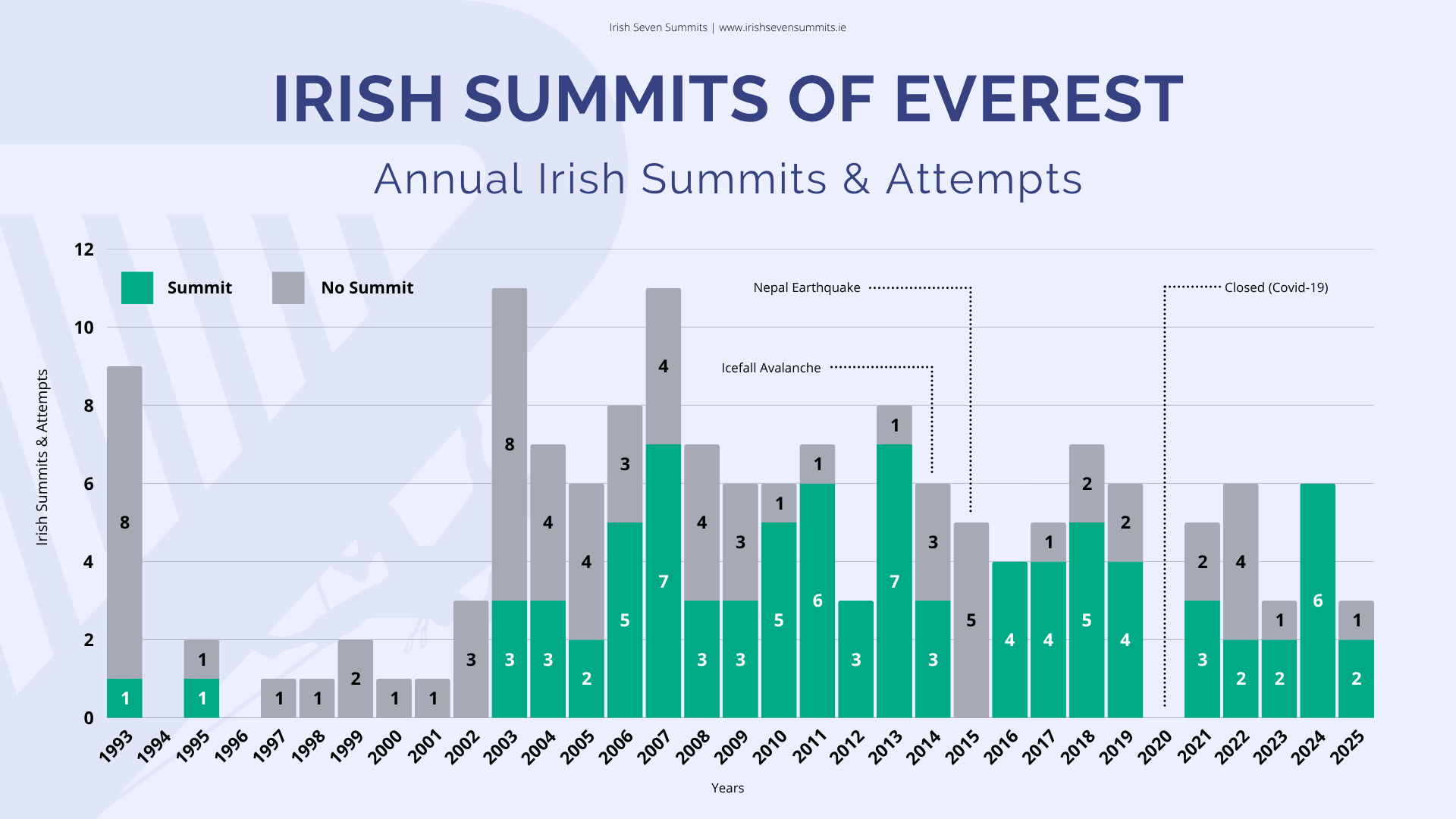
11 Irish climbers attempting Everest this Spring are spread across 5 different expedition teams. Ages range from 22 to 60, with climbers hailing from 11 different counties across the island of Ireland and they include climbers attempting to become Ireland’s youngest and Ireland’s oldest to summit Everest and one attempting to complete a 10th summit of Everest.
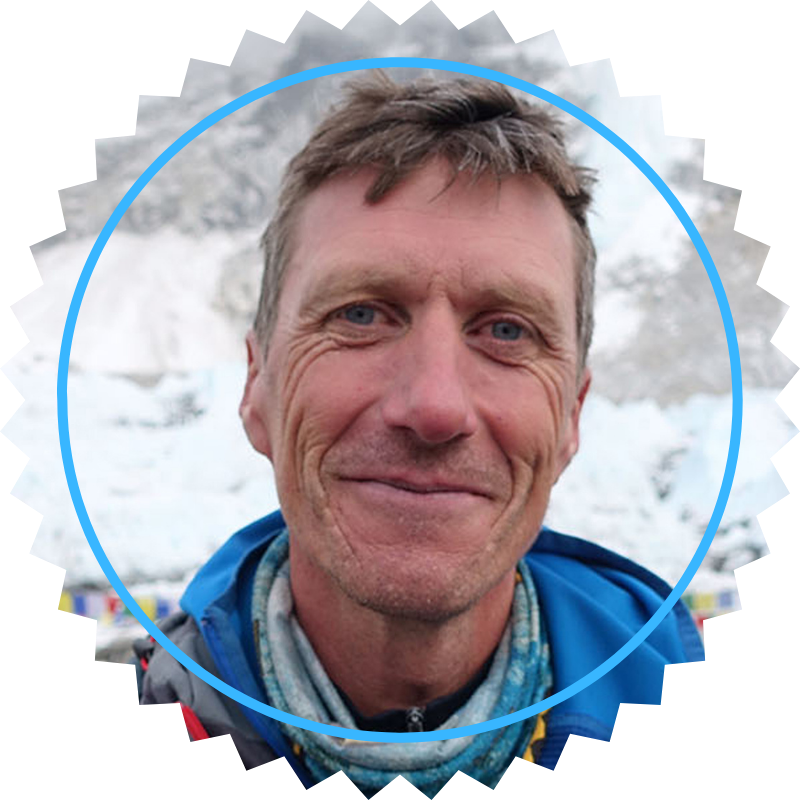
Robert Kelso Smith (55) is originally from just outside Omagh in Co. Tyrone, now living in Fort William, Scotland. He is the Expedition Leader for Adventure Consultants on Everest this season and so is working on the mountain. Rob is attempting to complete his 10th summit of Everest and 15th summit of an 8000m peak having previously climbed Everest 9 times, K2 twice and summitted Lhotse, Manaslu and Cho Oyu. In total, Robert has climbed five of the fourteen 8000m peaks – the most of any Irish climber, and has significant climbing and guiding experience including 8000m peaks, Snow Leopards and extensive Antarctic climbing and polar expeditions to name but a few. His resume also includes 20 summits of Mt. Vinson, as well as climbs of Sidley (x2), Sporli (1st ascent), Shinn (5x), Tyree, Sublime Peak (x2), Branscomb Peak and other smaller peaks in Antarctica. He has also completed 7 ‘Last Degree’ expeditions to the South Pole!
Expedition Website:
www.adventureconsultants.com
Expedition Cost: $83k USD
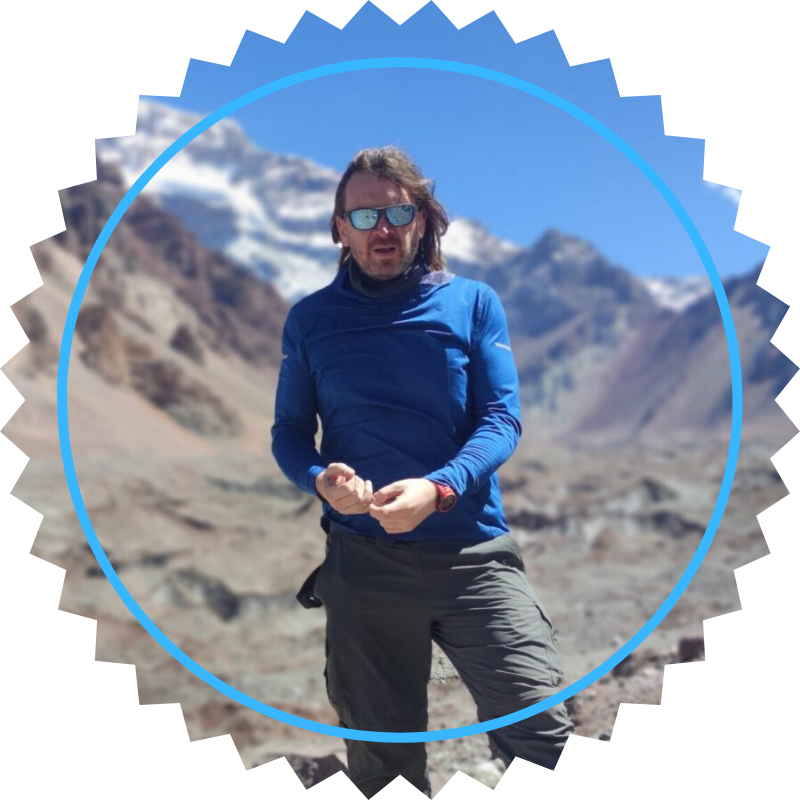
Andy Nolan (46) is from Charleville in Co. Cork, now living in Limerick. He is an adjunct lecturer and PhD student at University of Limerick. He is climbing Everest with the US-based ‘Climbing the Seven Summits’ (CTSS) company, and is part of their Western Guided team. Andy has been climbing since 2018 and is attempting to complete the Seven Summits (Bass list). Everest will hopefully be his seventh and final summit in the series, having successfully climbed Kilimanjaro, Elbrus, Aconcagua, Denali, Kosciuszko and Vinson. Throughout his Seven Summits, Andy has raised over €100,000 for charities including the Children’s Grief Centre, Irish Cancer Society and LauraLynn Children’s Hospice. For Everest, Andy is raising funds for Childrens Grief Centre in Limerick, with 100% of all funds raised going to the charity.
Expedition Website:
www.climbingthesevensummits.com
Fundraising Link:
idonate Link
Expedition Cost: $75k USD
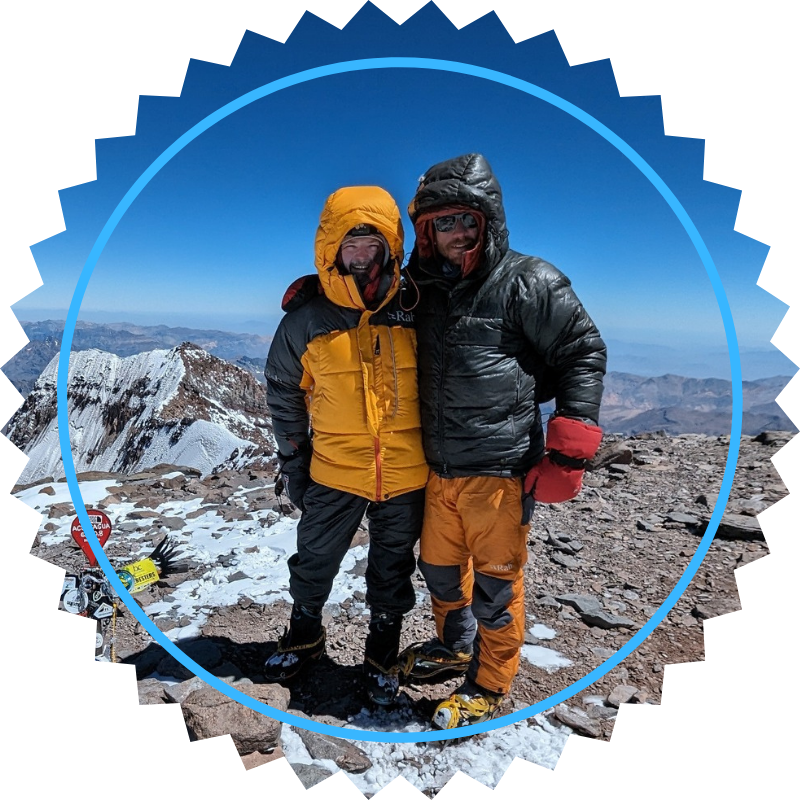
Philip Collins (38) is from Abbeyfeale in Co. Limerick, and now living in Québec Canada where he works as an electronic engineer. He is climbing Everest with the US-based ‘Climbing the Seven Summits’ (CTSS) company, and is part of their Western Guided team. Philip has been climbing since 2016 and is attempting to complete the Seven Summits (Bass list). Everest will hopefully be his sixth summit in the series, having successfully climbed Kilimanjaro (2016), Elbrus (2017), Kosciuszko (2019), Denali (2022) and Aconcagua (2024). Philip was a client of Pat Falvey’s during the climbs of Kilimanjaro, Elbrus and Aconcagua, while the Denali expedition (2022) was via Alpine Ascents International. Phillip’s mentor for his Everest expedition is Pat Falvey who has been involved in his climbs since the start of his Seven Summits journey.
Expedition Website:
www.climbingthesevensummits.com
Expedition Cost: $75k USD
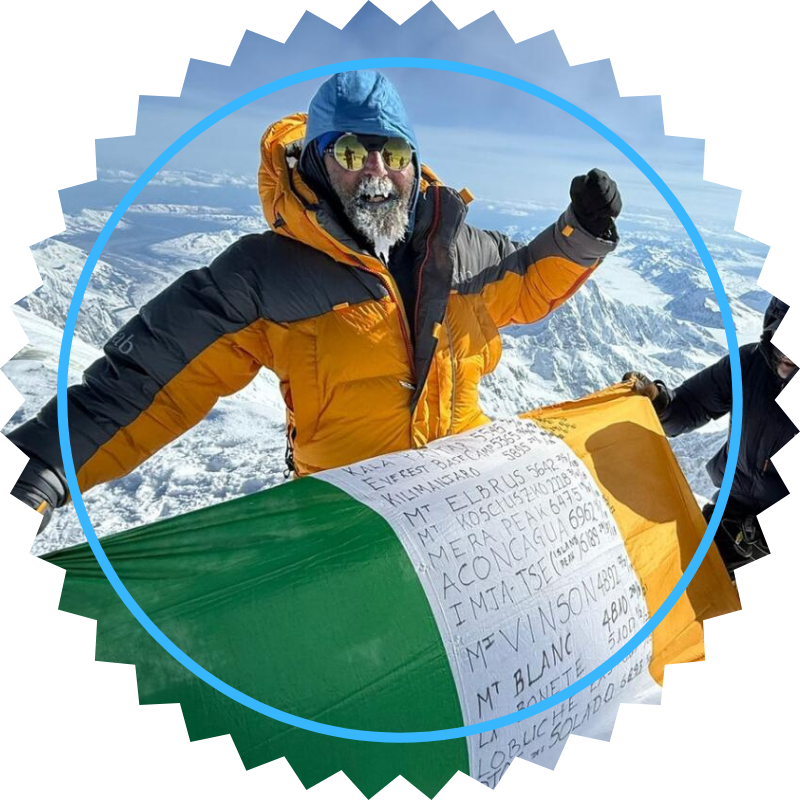
Diarmuid Morrissey (60) is from Athlone in Co. Westmeath, and divides his time between Athlone and Portugal. He is climbing Everest with the US-based ‘Climbing the Seven Summits’ (CTSS) company, and is part of their 1-1 Private Western Guided team. Former owner of Direct Medical in Athlone, he sold the company in 2017. He has a long association with Buccaneers RFC in Athlone. This is his third attempt at Everest having previously attempted it with Mountain Trip in 2021 (cancelled part-way due to Covid outbreak) and Furtenbach Adventures in 2022 (got sick at Camp 2). He is attempting to complete the Seven Summits (Bass list), and Everest would be his 7th and final summit of the series. He has climbed Kilimanjaro four times, Aconcagua twice, Elbrus, Kosciuszko, Vinson, Denali, Island Peak & Mera Peak. If successful this Spring, he would become the oldest Irish person and first Westmeath native to summit Everest.
Expedition Website:
www.climbingthesevensummits.com
Expedition Cost: $80k+ USD
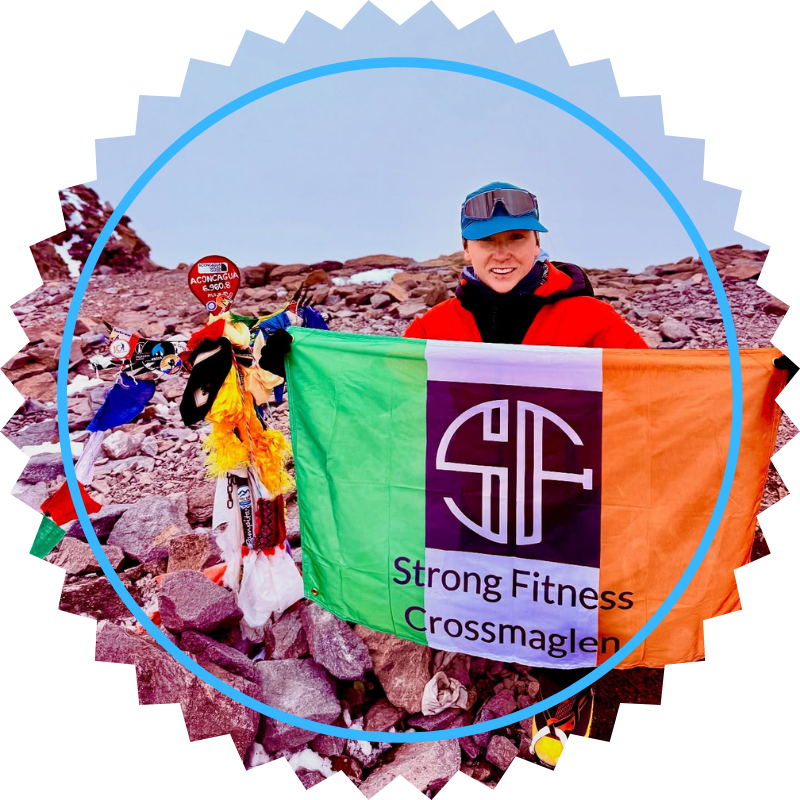
Sarah Armstrong (31) is from Crossmaglen in Co. Armagh. She is climbing Everest with the UK-Nepal company ‘AGA Adventures’. Sarah owns and runs a dental practice in Newry and a gym in Crossmaglen. She played Gaelic Football and Camogie with Crossmaglen Rangers and played Netball for Newry, Northern Ireland and Republic of Ireland, and captained the Irish team to the Youth World Cup. Sarah has been climbing since 2023 and is attempting to complete the Seven Summits (Messner List). So far she has climbed Kilimanjaro, Aconcagua and Carstensz Pyramid as well as completing climbs of Mt. Blanc, Mt. Kenya and Mt. Kazbek. She is also aiming to become the youngest Irish woman to complete the Seven Summits. Sarah is fundraising for the Southern Area Hospice in Newry, with 100% of funds going to the charity.
A brief note on AGA Adventures since that name will be new to many. It was formed in early 2023 by Adriana Brownlee and Gelje Sherpa. Adriana (25) is the youngest woman to climb K2 and youngest woman and first British woman to climb all 14 of the 8000m peaks. Her co-founder Gelje Sherpa has climbed all fourteen 8000m peaks and is the youngest person to summit K2 in Winter. This is AGA’s second season on Everest. Last season AGA had a single high profile client Mitch Hutchcraft, who swam the English Channel, cycled across Europe to India, then ran to Kathmandu, and hiked from there to Everest Basecamp to begin his climb, and then climbed Everest. It is the longest recorded ascent of Everest from sea to summit. Adriana’s father Tony is from Jordanstown, around 60 miles from Sarah’s home of Crossmaglen.
Expedition Website:
www.agaadventuresltd.com
Fundraising Link:
GoFundMe Link
Expedition Cost: $56k USD
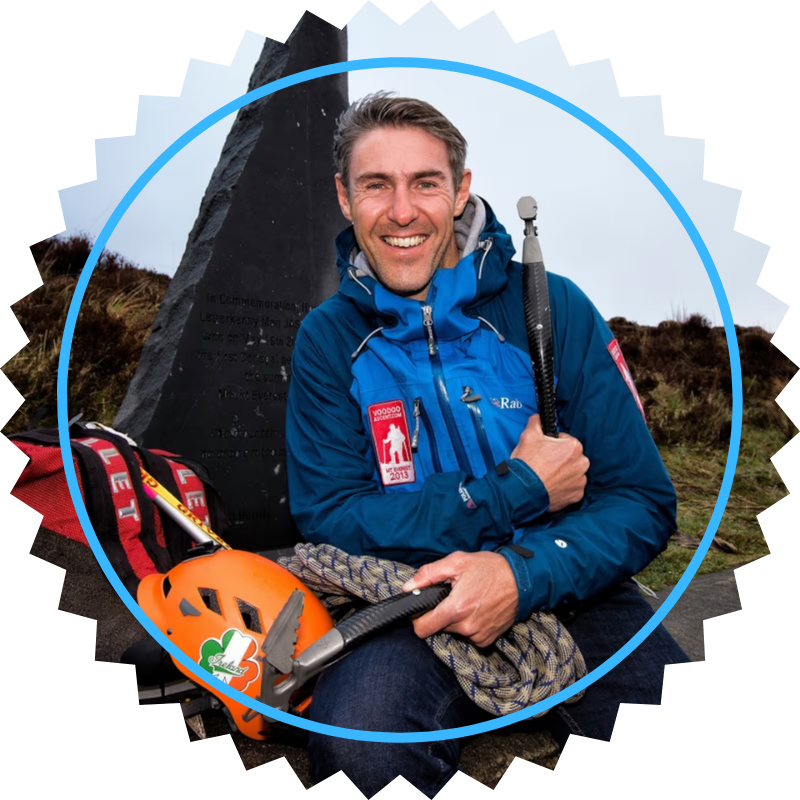
Jason Black (55) is from Letterkenny in Co. Donegal. He owns and operates ‘Black Mountaineering’ and will be guiding three Irish clients (Adam, Padraig & Eanna) on Everest this Spring. Jason reached the summit of Everest via the North (Tibet) route in 2013, and in 2018 became only the third Irish person to summit K2, reaching the top shortly after Noel Hanna (Down) and shortly before Robert Smith (Tyrone) to make it an Ulster treble on one of the worlds most notorious mountains, climbing with Madison Mountaineering. In 2015 he climbed Kilimanjaro twice within 24 hours and in 2019 he took part in the ‘World’s toughest adventure race’ in Fiji. As well as Everest and K2, Jason has also climbed Aconcagua, Kilimanjaro, Elbrus & Mt. Blanc and via his company he leads treks to Aconcagua, Kilimanjaro, Toubkal, Island Peak, Ama Dablam and EBC, among others.
Black Mountaineering began offering trekking trips in 2022, initially to EBC and then branching out to Kilimanjaro, Mera Peak, Island Peak, Ama Dablam, Toubkal and Aconcagua. This is their 1st season on Everest and Jason’s first season on the South side (his climb in 2013 was on North side). Black Mountaineering utilises 8k Expeditions in Nepal who provide permits, camp infrastructure, food, group equipment, transport and Sherpa support, while Jason and his team are then responsible for decision-making within their sub-team. This is similar to the structure used by Noel Hanna from Co. Down when he guided two Irish clients as a sub-team within the SST setup back in 2019.
Expedition Website:
www.blackmountaineering.com
Expedition Cost: €55k (~$64k USD)
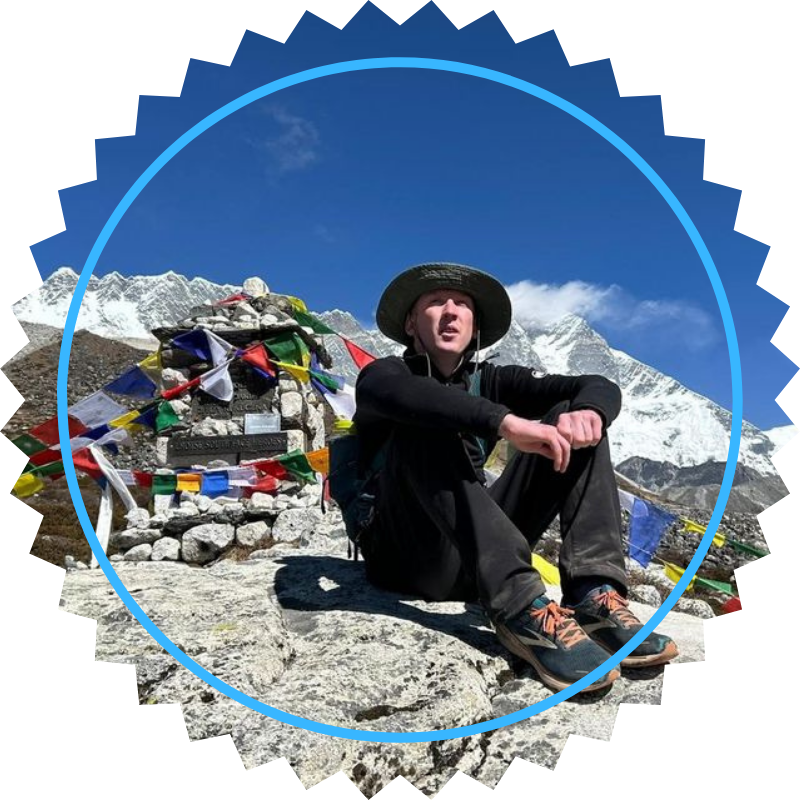
Adam Sweeney (22) is from Dunmore East in Co. Waterford. He is a student and has deferred college for six months to prepare for Everest and his attempt to become the youngest Irish person to and first from Waterford to climb Everest. In 2020 he cycled around the coast of Ireland while also climbing the highest mountain in each county that he visited, climbing a total of 13,147 meters and cycling 1,689 km in the process. In 2024 Adam took on his first big peak, reaching the summit of Aconcagua in February 2024 with Earths Edge, and later that year he successfully climbed Island Peak and Ama Dablam with Black Mountaineering. He is a client within the Black Mountaineering team on Everest this Spring and this will be his first 8000m peak attempt.
Personal Website:
www.irishadventurer.com
Expedition Cost: €55k (~$64k USD)
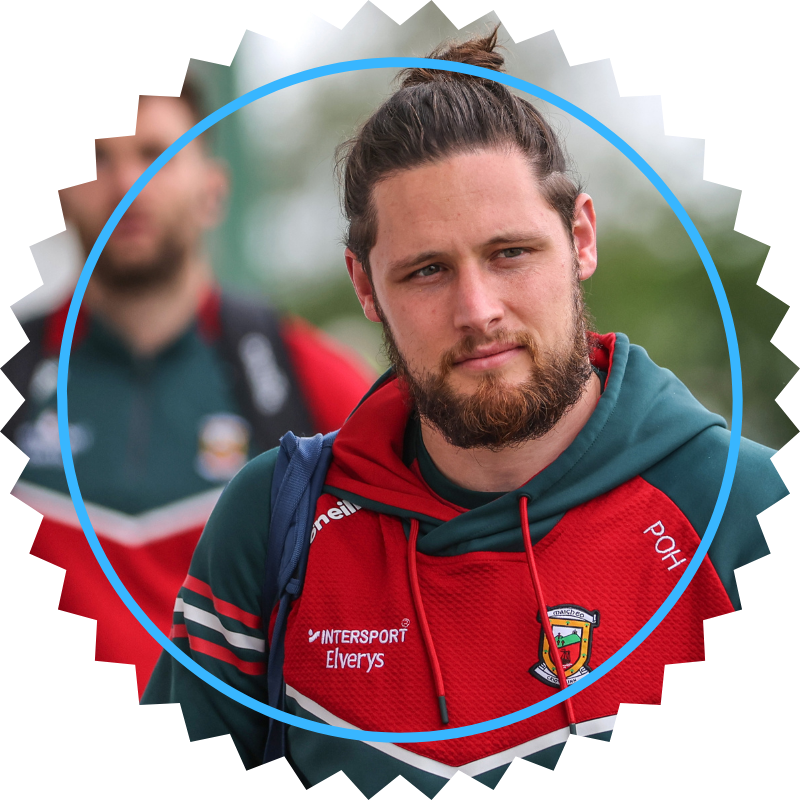
Padraig O’Hora (33) is from Ballina in Co. Mayo where he works as a liaison officer with Mayo Mental Health Association. He is a former and accomplished Mayo inter-county Senior Footballer and won Connacht SFC titles in 2020 and 2021 and National Football League title in 2023 with his native county. He retired from inter-county Gaelic Football in 2024 and began hiking and climbing later that year, reaching his first major summit in January 2025 on Aconcagua and climbing Gran Paradiso and Mt. Blanc later in 2025. He is a client within the Black Mountaineering team on Everest this Spring and this will be his first 8000m peak attempt. He will be using the climb to raise awareness for Mayo Mental Health Association and will be writing a diary for the Irish Times newspaper during the expedition.
Personal Website:
www.padraigohora.com
Expedition Cost: €55k (~$64k USD)
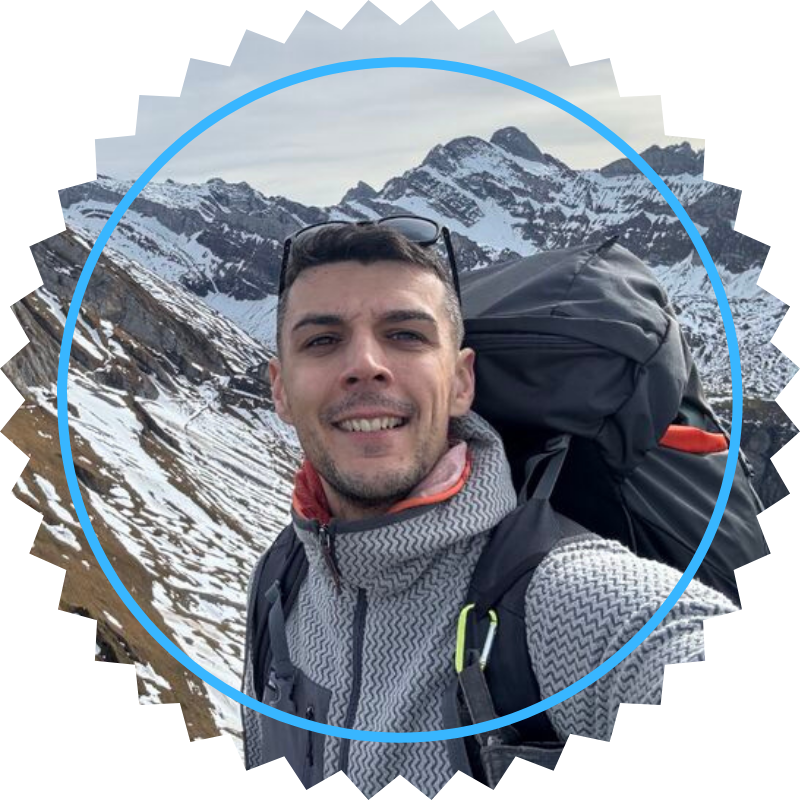
Eanna McGowan (31) is from Dublin, and currently lives in Switzerland. He works in sales and marketing for Johnson & Johnson in Zurich where he has lived since 2024. Eanna was due to climb Everest via the North side with Furtenbach Adventures, but in January 2026 he announced that his plans had changed following news that the Chinese authorities were set to close the North side to foreigners this season, and that he had switched to the South side and switched to the Black Mountaineering team. His past climbs include Kilimanjaro, Matterhorn, Aconcagua, Denali (attempted) and Mt. Blanc (attempted), and he has also completed the Marathon De Sables, Kerry Way Ultra and Ironman events. He is a client within the Black Mountaineering team on Everest this Spring, is fundraising for ISPCC and has set up a gofundme which has raised over €3000 to date with funds split 50/50 between the charity and his own expedition costs.
Personal Website:
www.eannaseverestjourney.com
Fundraising Link:
GoFundMe Link
Expedition Cost: €55k (~$64k USD)
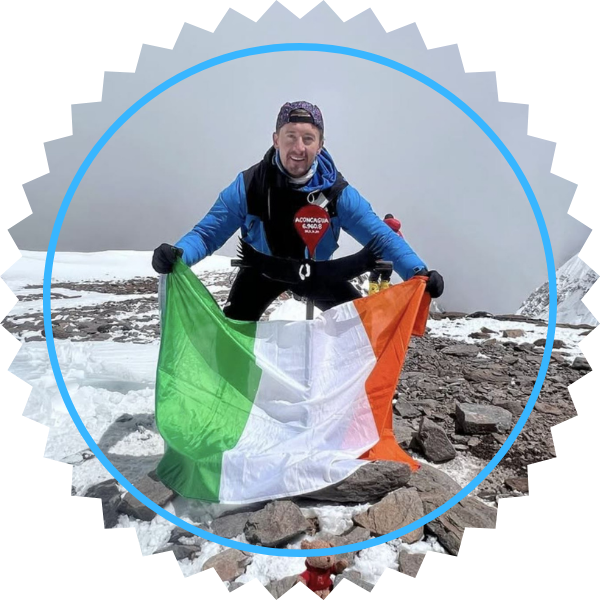
Frank McCarthy (39) is from Kerry, and currently lives in Dubai. He works as a senior commercial operator turned strategic advisor, based in Dubai and working across the Middle East. He is attempting to complete the Seven Summits and has previously climbed Kilimanjaro (2013), Elbrus (2021), Aconcagua (2023) and Carstensz Pyramid (2026), along with an attempt on Denali in 2025. He has also competed in endurance events including Ironman 70.3. Frank will be attempting a rapid ascent of Everest with the Madison Mountaineering expedition team, via their Express package. That involves three days from arrival in Kathmandu to reaching Everest Base Camp and an accelerated rotation schedule up the mountain. See their Express package here.
Expedition Website:
www.madisonmountaineering.com
Expedition Cost: $80k

Tom Walsh (55) is from Galway, and lives in Seattle USA. He is a Research Professor at the University of Washington, studying inherited breast cancer. Tom was born in London to Irish parents who then moved back to Inverin in Co. Galway when he was a teenager. He later moved to Seattle in 1997. He has previously climbed Aconcagua along with volcanoes in Mexico and Ecuador as well as various peaks in Washington State, including Mt. Rainier. Tom was originally booked with the Alpenglow expedition team on the North (Tibet) side, but when the Chinese authorities closed the mountain he switched to Madison Mountaineering, and will be attempting a rapid ascent of Everest via their Everest Express package. That involves three days from arrival in Kathmandu to reaching Everest Base Camp and an accelerated rotation schedule up the mountain. See their Express package here.
Expedition Website:
www.madisonmountaineering.com
Expedition Cost: $80k
Everest Status (30th April):
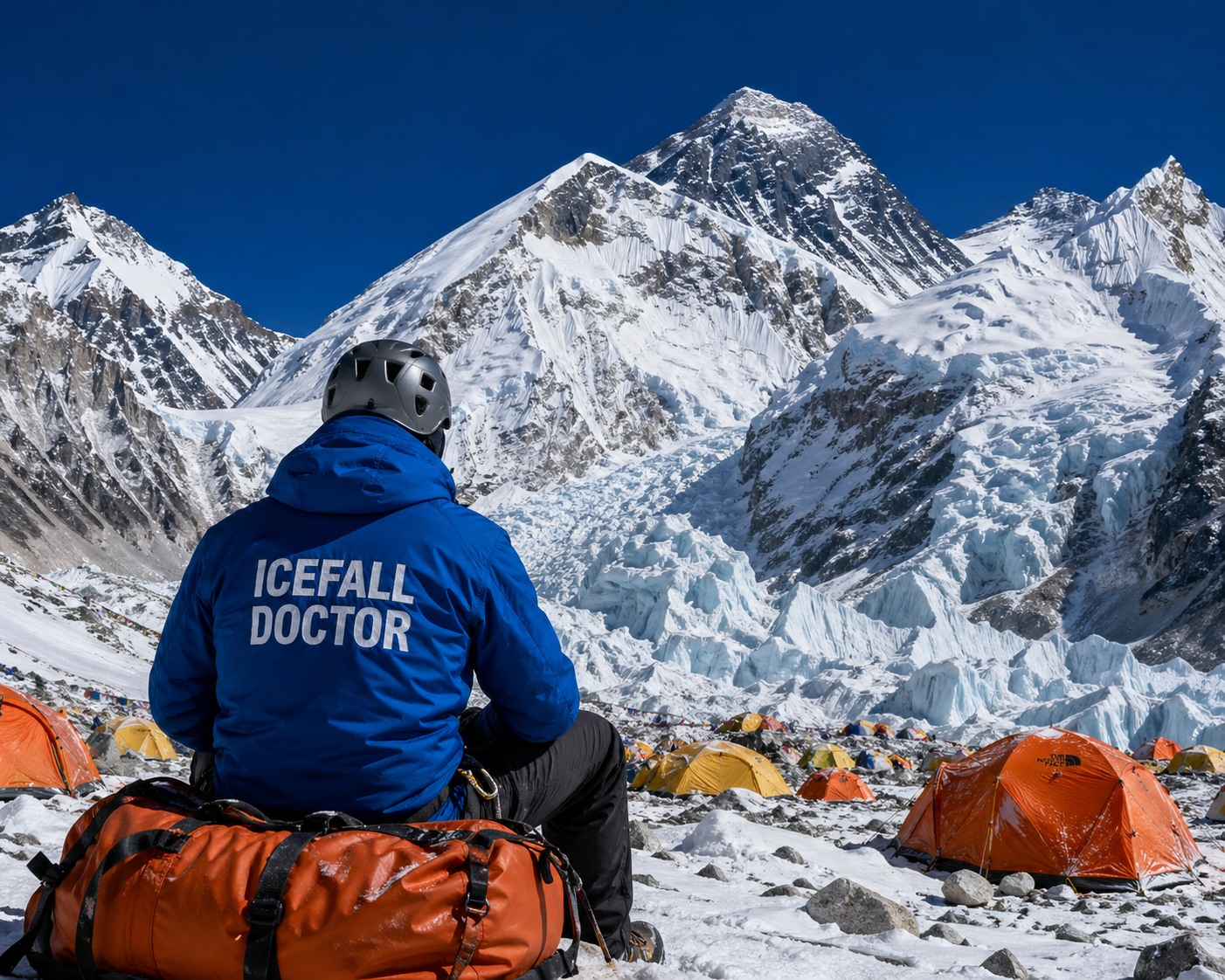
The icefall was finally opened on 28th April, the latest point it has been opened in recent history. Here is status of Irish climbers at end of April.
Robert Smith is at EBC (5364m): The Adventure Consultants team which Rob leads began their expedition on 9th April and reached Everest Base Camp on 18th April. They then headed off to Lobuche and climbed Lobuche East (6119m) on 23rd April, sleeping at high camp for a night before and after the summit before returning to Everest Base Camp on 25th April to await news regarding the icefall. The team is currently at Everest Base Camp, adapted to the altitude equivalent of Camp 1 (6065m) on Everest and hiking above EBC to top up their adaptation as the icefall route opens ahead of them.
Andy Nolan, Philip Collins & Diarmuid Morrissey are on Mera Peak (6476m): The CTSS team which includes Andy, Philip and Diarmuid began their expedition on 1st April when they landed by helicopter in Lukla. They climbed Lobuche East (6119m) on 14th April as part of their acclimatisation, and arrived at Everest Base Camp on 16th April. After a period of waiting for progress on the icefall route, the team decided to head to Mera Peak on 25th April, departing for Lobuche base camp where they stayed overnight. Then on to Mera high camp (5800m), and then moved up to 6400m on Mera where the team pitched their camp and slept for 3 nights at 6400m, as well as climbing to the summit of Mera Peak (6476m) twice during that period. Then it was down to Mera base camp (Khara) and will return to Everest Base Camp on 2nd/3rd May to plan their rotation(s) up the mountain. The 1:1 group within the CTSS team which included Diarmuid done an extra night sleeping at 6400m on Mera.
Sarah Armstrong is at EBC (5364m): The AGA Adventures team began their expedition on 8th April when they landed in Lukla on 8th April. Sarah reached Everest Base Camp on 14th April. The team then headed to Lobuche to summit Lobuche East (6119m) on 16th April. It was then back to Everest Base Camp via helicopter the following day on 17th April where the team has remained awaiting the opening of the icefall route ahead of them.
Jason Black, Adam Sweeney, Padraig O’Hora & Eanna McGowan are in Namche (3440m): The team began their expedition on 3rd April when they landed in Lukla and they arrived in Everest Base Camp on 10th April. A couple of days after arriving into EBC the team was forced to drop back down to Dingboche when one of the team developed altitude sickness and reported low oxygen saturation (in 40’s). A couple of days to recover in Dingboche and the team returned via helicopter to Base Camp. The icefall delay caused a change in plan, with a trip to Lobuche to summit Lobuche East (6119m) on 20th April before returning to Everest Base Camp next day. A few days later the team dropped down the valley to stay in Namche while the icefall serac issue was being sorted. The team are in Namche at time of writing this and will take a helicopter back to Everest Base Camp on 1st May with their first rotation up to Camps 1 and 2 starting soon thereafter. Padraig reported in his recent Irish Times diary that team leader Jason Black is suffering from an ankle injury which might put him out of action in terms of climbing higher on Everest. If Jason is unable to ascend above a certain level, this would mean the four clients being guided to the summit by their respective Sherpa, with Jason in a monitoring role from afar. What happens there will become clearer as time moves on.
Frank McCarthy and Tom Walsh are at EBC (5364m): Both men arrived in Kathmandu on 25th April and took a flight to Lukla on 26th April with plans to take a helicopter from Lukla to Pheriche to begin their two-day trek to EBC. Their flights didn’t exactly go to plan, with cloud causing their flight from Kathmandu to Lukla to be diverted to Ramechap Airport instead. After a five hour wait they were and back on the plane and off to Lukla where they grabbed a helicopter flight to Pheriche. However, cloud then caused that flight to be diverted to Dingboche. Once on the ground, they trekked to Pheriche to conclude what should have been a 3 hour flying day which turned into an 11 hour flying and hiking day. On 27th April they trekked from Pheriche to Lobuche, and on 28th April they pushed on from Lobuche to arrive at Everest Base Camp, just 3 days after leaving Kathmandu. Their rapid ascent itinerary (here) includes one big rotation above EBC to Camps 1, 2 & 3 before retreating back down to EBC to await the summit window in mid May.
Lhotse Status (30th April):
Cal McDonagh (26) began his expedition on 10th April when he flew by helicopter to Lukla. He reached Everest Base Camp by 20th April, to join the wider Summit Climb ‘Everest & Lhotse’ team. During the time at EBC he hiked up to Pumori ABC (5800m) and the team then headed off to Lobuche on 24th April to climb Lobuche East (6119m) and are now back at Everest Base Camp. Cal is climbing with Dan Mazur’s Summit Climb expedition team.
James McManus (43) began his expedition when he landed in Lukla around 18th April and arrived to Everest Base Camp on 27th April. Following the announcement of the opening of the icefall on 28th April, James announced that he was planning his first rotation to Camp 2 and back to EBC starting on the night of 30th April which would make him the first Irish climber to travel through the icefall this season. James uses the camp infrastructure & services of Seven Summit Treks at Base Camp, but builds his own camps on the upper mountain. His rotations above EBC are unassisted (i.e. no Sherpa) but his summit push from EBC to the top of Lhotse will be done with a Sherpa who will be using supplementary oxygen from Camp 3 onward and will be carrying extra oxygen should James need it in case of emergency.
It is worth noting that Everest and Lhotse share the same route from Lukla all the way up to Camp 3 (7100m), hence the dangers around the icefall which impact Everest climbers, also impact Lhotse climbers too.
Note: There is an additional permit issued to an Irish citizen by the ministry in Nepal for a peak in Nepal, but it is not clear either which peak it is or who the climber is.
Icefall Serac – Q&A
Is the icefall now open?
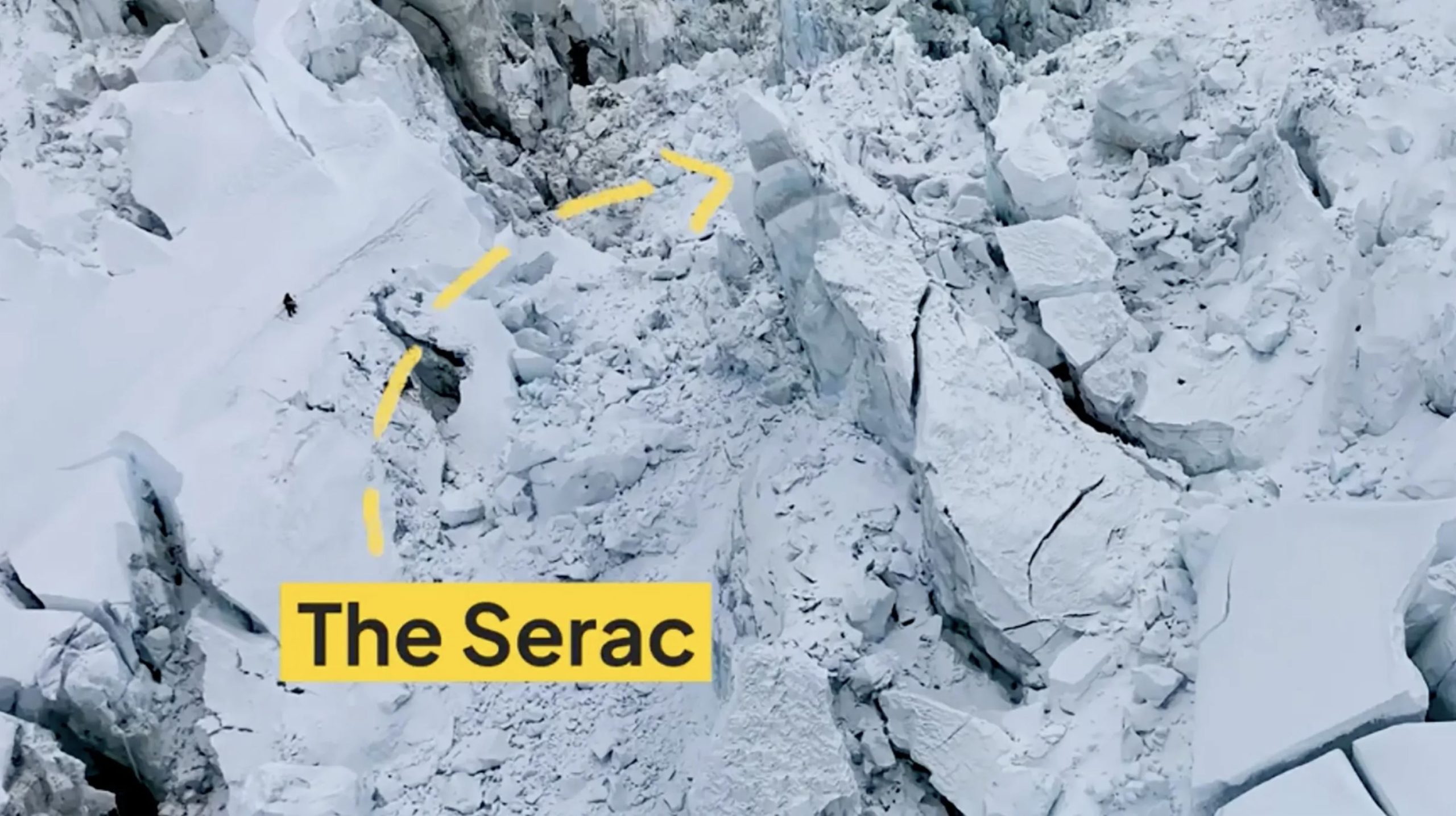
Yes, officially opened on 28th April. A joint team of mountain guides from the Expedition Operators Association of Nepal (EOAN) and icefall doctors from the Sagarmatha Pollution Control Committee (SPCC) reached Camp 1 on Tuesday morning and pushed on to Camp 2. According to a press release from SPCC, the route established passes below the hanging serac.
“The serac has multiple cracks and may collapse at any time” the SPCC wrote in its release.
They concluded with the following… “Given the circumstances and the limited time remaining before the climbing season, the team had no alternative but to open the route passing below the serac.”
Has the danger gone?
No. The specific danger this season stems from a hanging serac (180ft wide, 90ft tall) above/in a section of the icefall route, which had a partial collapse recently but approximately 60% of the serac is still waiting to fall. According to a press release from the Sagarmatha Pollution Control Committee (SPCC), the group that oversees the rope-fixing team in the icefall, the route now established passes below this hanging serac in one section. So the message seems to be that there is a route, but it comes with a heck of a caveat!
Has this caused delay?
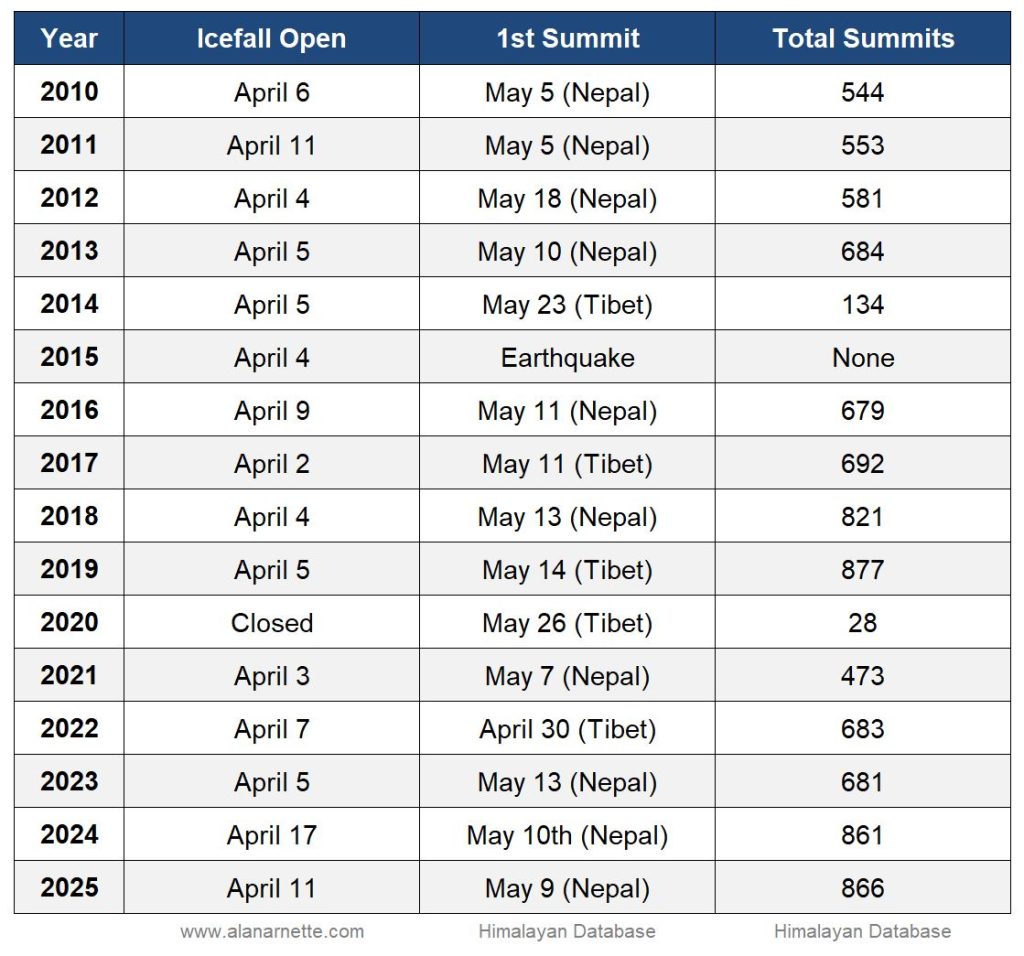
Yes. Looking back at data from the past 15 years of Everest climbs (combining Himalayan Database summit data and icefall open dates compiled by Alan Arnette), we can see that this year is the latest by a country mile that the icefall has opened. Typically the route would have been in place in early April and teams would have now completed their first journey to Camp 1 and back thru the icefall. In absolute terms, overall progress above EBC is a week late compared to other years, and that matters when the goal (summit window) is something of an immovable object. The consequence is that rotation plan will have to be amended, truncated and revised. See below assessment of icefall opening dates versus first summits for the past 15 years.
Has this happened before?
Yes. A large hanging serac above the icefall caused similar problems during the 2019 Autumn Season and that season was eventually abandoned with the serac collapsing at some point before Spring 2020. In 2014 the Everest season came to an abrupt and shocking halt on 18th April 2014 when 16 mountain workers were killed by a serac collapse as they were ferrying materials and supplies across the icefall to C1 and above. It was the biggest disaster in the history of Everest at the time and both the event and the response from government is woven deep into the psyche of the Sherpa community (we were there for that one). In 2023 a collapsing ice tower in the icefall killed three mountain workers. The icefall is always moving and is dangerous at the best of times, but intrinsic danger is very different from a specific known danger that you can see, scale and knowingly have to pass underneath.
What happens next?
SPCC issued a statement to present their view on the proposed route so that everyone knows what they are getting into here and to outline guidelines for moving through the proposed route. It is impossible to predict when the entire serac will collapse, so this will be a season where teams have to accept a known risk, and make a judgement on how they wish (or don’t wish) to proceed. Those who shoulder the majority of that risk are the mountain workers (porters etc.) who ferry materials & equipment to build/stock the camps, and who travel through the icefall many times more than clients do. In reality they cannot choose the risk level they are willing to accept here as commercial pressure grows to get this season back on track. Expect workers to start moving through the icefall immediately and clients to follow in the coming days, and expect some expedition companies to pause and see if the serac collapses and clears, and delay their summit push to later in May. Some may assess the risk and decide to avoid and go home, but group think is a big factor on Everest and with so much money on the line here for clients, expedition owners and the Nepal Government, it will be very difficult to make big calls in isolation, and impossible for employees to raise their hand in objection to the known risk this year. It is more likely that everything will progress now until something happens to stop traffic.
How many people are waiting?
The Nepal ministry reported on 30th April that 464 client permits (364 men, 100 women) have been issued for Everest thus far across 47 teams, plus add to that their individual guides/sherpa plus all the mountain workers who ferry materials and set up camps, plus another 163 clients for Lhotse and Nuptse who share the route and some camps, plus their guides/sherpa too – So that’s in excess of 1200 people – all waiting to move thru the icefall as soon as possible! With the North (Tibet) side of the mountain closed this year, there are record numbers on the South side, which further complicates logistics. Furthermore, the guidance offered by SPCC limits numbers on ladders in certain areas and advises moving quickly through specific danger zones, which is easier said than done on your first trip through the icefall, which is usually dogged and exhausting – and the vast majority of clients will be going through that icefall for the very first time! Managing stagger and quick movement to avoid too many being stood in the danger zone at any point in time, is going to be challenging.
Can climbers push for the summit?
No. The rope-fixing team completed their work to Camp 2. They will then have to push on to rope the route to Camp 3, Camp 4 and then on to the summit whenever a weather window allows (possibly during the first week of May). Only then will others be able to follow that fixed rope route to the summit. With a good wind, it will likely be close to 10th May before anyone can attempt to go for the top, and after that it is in the hands of the weather gods regarding the summit window thereafter.
When will summits happen?
That is dictated by a weather system called the jet stream which consumes the top of the mountain with strong winds for most of the year and moves away from the mountain for a short period in mid-to-late May to enable climbers to reach the summit in the Spring season. If you analyse Spring season summits from 1953 to 2025 (over 13,000), 90% occurred between 15th and 25th May. However before a climber is ‘ready’ for their summit push, they have to complete a series of rotations up and down the mountain to adapt to progressively higher camps. Summit windows are not dictated by crowds or by the level of experience or inexperience on the mountain. It is entirely down to the weather. If climbers are fully adapted and ready when the weather window arrives, then they have a shot at a summit push. If not, then they will not. The summit window can be as wide as two weeks and as narrow as 48 hours. There is no way to know. In 2012 and 2019 the window was very narrow and led to long lines of people in the icefall and up high. Other seasons enjoyed very wide windows with some climbers having the summit to themselves with little or no long lines.
What are rotations?
Everest is climbed by making incremental progress on multiple trips from EBC to higher camps and back to EBC to rest and recover before heading further up each time. Each rotation goes through the icefall twice – on the way up and back. Rotation 1 typically takes you from EBC to Camp 1 to sleep, and then on to touch Camp 2, and then back to Camp 1 and back to Base Camp. The primary purpose of that initial rotation is to get you used to the terrain in the icefall and adapt to Camp 1. The first time you move thru the icefall you will be slow and guarded, but all subsequent trips thru the icefall need to be much faster because the destination is much further away. You can offset this rotation by climbing a 6000m peak elsewhere in advance (i.e. Island Peak or Meru or Lobuche). Rotation 2 typically takes you past Camp 1 to sleep and have an extra rest day at Camp 2, then on to touch the Lhotse Face, then back to Camp 2 to sleep, then back to Base Camp. Rotation 3 then sees you go straight to Camp 2 to sleep and rest, then on to Camp 3 to sleep on supplementary oxygen for the first time, then back to Camp 2 and then back to Base Camp. At this point you have sufficient adaptation to attempt a summit push. Each rotation is followed by 2-3 days of rest and recovery at EBC, and the period prior to the summit push typically includes much longer rest where climbers descend down the valley to recover ahead of the big summit push. These rotations typically start around 20-25th April and finish around 10th May. This year all have to happen in May due to the delay, which is why many teams have gone elsewhere to climb Lobuche and Meru or other peaks to maintain form and gain altitude in lieu of some of the early rotations on Everest. The delay means plans will have to be redrawn, so expect 2-3 rotations to be scrapped in favour of 1-2 bigger rotations (for those with most adaptation perhaps just one rotation) ahead of summit push. Those who elected to climb higher elsewhere during the past week will be on the front foot in reducing the need for multiple rotations and therefore multiple trips across the icefall.
Will there be queues?
Almost certainly, yes. There will likely be queues in the icefall on the lower end due in part to the sheer numbers flowing through and due in part to the restrictions that will apply to parts of the route due to the serac danger. Barring a very long summit window (which could yet happen), there may also be long lines on the Lhotse face, on the Hillary Step and other sections of the upper mountain too due to the delays. The summit window doesn’t move to accommodate a delay, so the lost time will have to be made up, and will be done with the largest crowd ever assembled to climb Everest. Some teams will want to move quickly and shadow the rope fixing team to the top, so they can summit early. In a normal year, there are always one or two nimble teams shadowing the rope fixing team, but this year they might turn around and, like Forrest Gump on his walk across America, find a mega crowed of people behind them. Others will choose to wait it out, let the crowds roll through and then try to make a push later in May with the added benefit that the serac may have cleared by then too. Both approaches come with risk. If you go early you will be in crowds which is dangerous and unpredictable. If you go late you might run out of time and the summit window might expire. The logistical strength of your expedition company comes into its own in these days, which is why it is critical to have chosen wisely in terms of who you climb with. Having the right intel, weather information, experience on the mountain, experience in dealing with the crowds at the known chokepoints, and an understanding of the dynamics going on this year, will all feed into who succeeds and who does not.
Conclusions
The icefall is open, but extreme caution is needed, and no amount of marketing or glossing over that reality will make it otherwise. The SPCC statement on the opening of the route included the following… “Given the circumstances and the limited time remaining before the climbing season, the team had no alternative but to open the route passing below the serac.” This indicates that commercial pressures are driving decision making. My objectivity on this topic is somewhat compromised having sat at Everest Base Camp in the hours, days and week after the 2014 icefall disaster, watching, listening and experiencing the post-mortem of that years catastrophe, where the wider mountaineering community pledged that every effort would be made in future to reduce risk to porters and others in the icefall. In that context, it is hard to imagine 1200 people travelling under/near an 180ft x 90ft hanging serac in one of the most dangerous parts of the climb. The guidelines provided by SPCC will be difficult to align with lived experience of most clients sluggishly pushing through the icefall on their first rotation. It is difficult to see how most teams can complete their full suite of planned rotations in the time remaining unless they have already pivoted to other peaks to do alternate climbs in lieu of time spent at Camps 1 and 2. So rotation plans will likely be truncated, which brings its own set of problems. There are lots of unanswered questions, but what is not unclear is the fact that a very significant danger sits above part of the icefall route and every day we will all be holding our breath until everyone is through safely. Making this all happen safely and efficiently each day will take military precision. I will be keeping my fingers crossed, slightly shocked that things are progressing given the memory and promises of 2014, but interested in seeing how this significant known danger is mitigated and managed. Judgement is the key word now, and those who journey successfully under/around the danger will likely believe it to be fine, which it will be… until it’s not!

The author: Paul Devaney is a native of Longford, is co-founder of the Irish Seven Summits project and is an aerospace professional. He is an amateur mountaineer and has completed six of the Seven Summits and attempted Everest in 2014 and 2015. In both seasons his expedition was halted due to major incidents (Avalanche in 2014, Earthquake in 2015). Paul has climbed and trained in the Alps and completed climbs from Alaska to Antarctica and from Jordan to Ecuador. He currently lives in Cork with his wife Rima and twin daughters, and has been documenting Irish climbers on Everest & 8000m peaks since 2014.