

Everest 2025 – Irish Season Summary
May starts with teams completing their first rotation up the mountain having gained adaptation at Camps 1 and 2 and experienced a snippet of live at Camp 3. Climbers then return to base camp to recover and will do it all again the following week with the goal of sleeping even higher at Camp 3 to maximise adaptation ahead of the summit push in mid to late May when the weather window opens.
This Spring season saw three Irish climbers attempt Everest.
– Robert Smith from Tyrone
– Shane Boyd from Fermanagh
– Anthony Day from Down
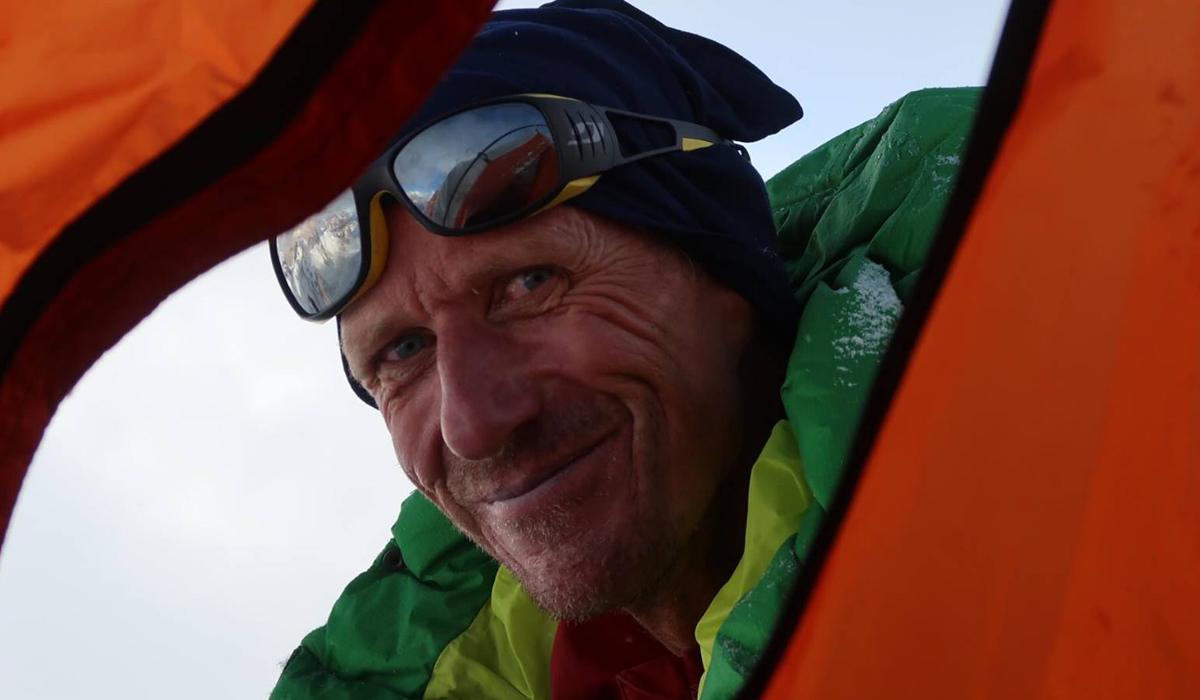
Robert Kelso Smith (54) from Tyrone is leading the Adventure Consultants expedition team on Everest this Spring. He has previously climbed Everest 8 times, working as a mountain guide. Robert successfully reached the summit on 25th May 2025 at 6am, leading clients from Adventure Consultant to the top and completing his 9th summit of the worlds highest peak.
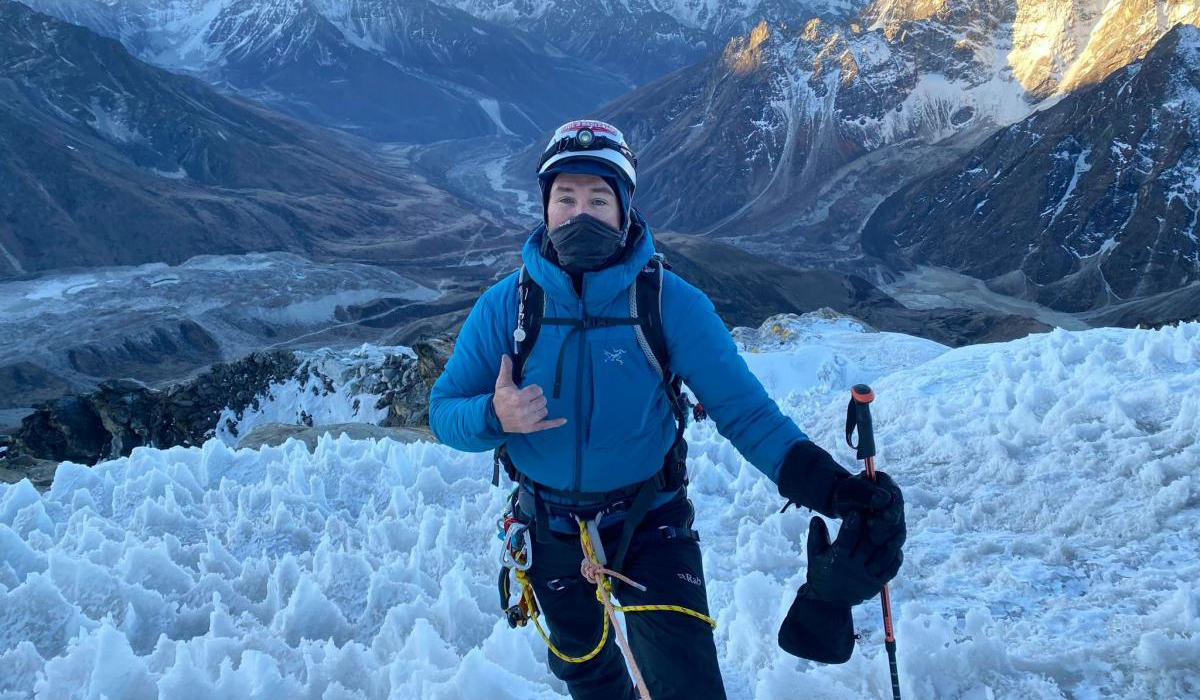
Shane Boyd (42) from Fermanagh is climbing with local Nepali company Expedition High Mountain Treks (EHMT). The team completed Lobuche (6119m) and Island Peak (6189m) as part of their acclimation in April 2025. They headed off on their first rotation to Camp 1 and Camp 2 in late April, however Shane reported pains in his stomach and chest on the way to Camp 2, so turned around and then flew out to Kathmandu for scans, and decided to end his expedition for health reasons.
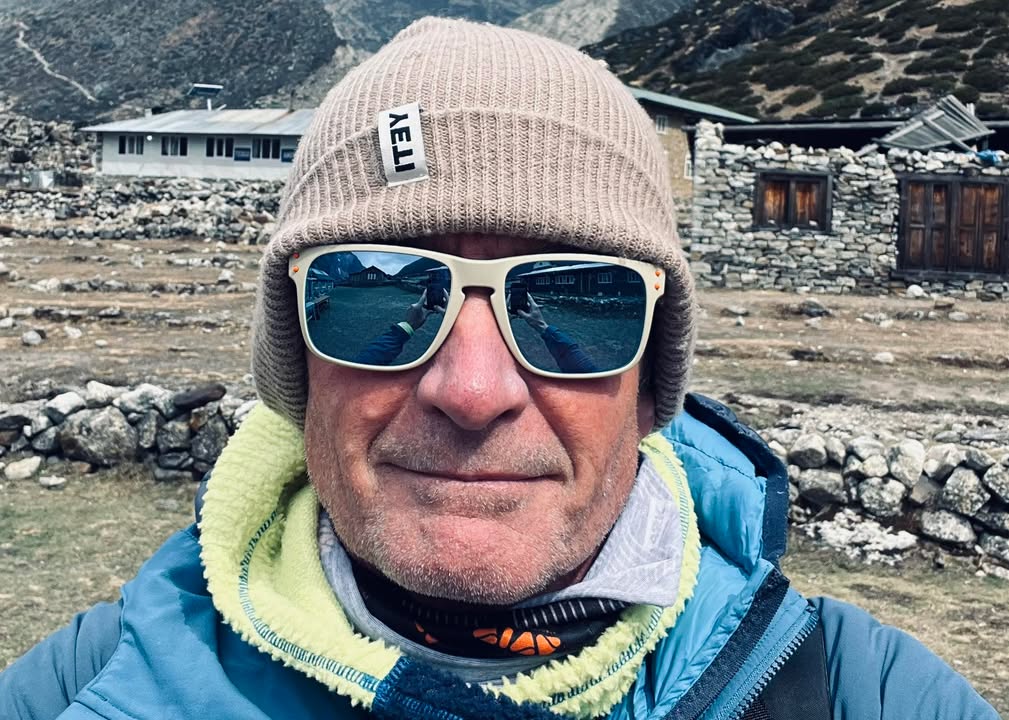
Anthony Day (59) based in Co. Down is an attorney originally from Surrey in England, and dual Irish/UK citizen who has been living in Co. Down since 2016. He has previously climbed in East Greenland (three trips) including climbs in the Sortebrae Range where many of the peaks are either very rarely climbed or totally unclimbed. He also climbed in Patagonia and in the Southern Alps (most notably Mt Tasman) and has previously attempted Ama Dablam in Nepal. This was his first attempt at climbing an 8000m peak. He is climbing with the Furtenbach Adventures expedition team and climbing on his Irish passport. Anthony successfully reached the summit of Everest on 19th May 2025 at 5:15am.
Makalu (8485m)
James McManus from Tipperary is attempting to climb Makalu without supplementary oxygen, along with his personal guide Tshering Lama Sherpa. If successful he will be the first Irish climber to summit Makalu. He headed to Camp 2 (6500m) on May 2nd to push on to touch Camp 3 (7500m) and head back to Camp 2 to sleep before returning to Base Camp on May 4th. His accelerated schedule (to summit within 30 days of arrival in Nepal) had him attempting the summit push at the next weather window after this rotation. On May 10th, James went for the summit, but had to turn around at 8,300m citing exhaustion & hallucination after 18 hours of ascent.
This was his 4th attempt to climb an 8000m peak. Previous attempts were as follows:
2022 Everest (8848m): James climbed with local Nepalese operator Seven Summit Treks (SST). This was a ‘No Os’ attempt with his personal guide (Tshering Lama Sherpa). He turned back due to mixture of high winds and exhaustion. Reached max of 7850m. Was evacuated by helicopter from Base Camp to hospital in Kathmandu due to altitude sickness issues (HAPE/HACE). He made a full recovery.
2023 Dhaulagiri (8167m): James climbed with local Nepalese operator Seven Summit Treks (SST). This was again a ‘No Os’ attempt with his personal guide Tshering Lama Sherpa. Reached max of 7500m. Turned back due to mixture of high winds and deep snow.
2024 Lhotse (8516m): James climbed with local Nepalese operator Seven Summit Treks (SST). This was his third ‘No Os’ attempt with his personal guide Tshering Lama Sherpa. This was a rushed ‘Plan B’ climb after his original plan to climb Everest via the Tibet side was scuppered by frustrating Chinese bureaucracy. He then got ill during the accelerated ascent and turned back after Camp 2. Reached max of 7700m.
James climbs one-to-one with his personal guide – Tshering Lama Sherpa, and has used the infrastructure (camps/food/support) of Seven Summit Treks (SST) on previous attempts. According to the Himalayan Database, Tshering Lama Sherpa has climbed an 8000m peak once, Everest in 2021 with SST when he was the assigned Sherpa to Noel Hanna. On that occasion he used bottled oxygen from Camp 3 to summit and back to Camp 3 (very typical for Everest ascents). According to the Himalayan Database, Tshering has not summitted or been into the death zone of an 8000m peak without bottled oxygen.
Objectively they were taking on a lot of risk with an accelerated ascent profile combined with the pressure of fourth time around (that pressure exists whether anyone admits to it or not) and without an abundance of 8000m experience around them. Each climber assesses their own risk and makes those decisions just as each reader makes their own determinations and observations. Records are made by pushing boundaries, but life above 8000m is seismically different on every level, so having extreme altitude experience around you helps to manage unknowns, especially on a ‘No Os’ ascent.

The author: Paul Devaney is a native of Longford, is co-founder of the Irish Seven Summits project and an aerospace freelancer based in London. Paul is an amateur mountaineer and has completed six of the Seven Summits and attempted Everest in 2014 and 2015. In both seasons his expedition was halted due to major incidents (Avalanche in 2014, Earthquake in 2015). Paul has climbed and trained in the Alps and completed climbs from Alaska to Antarctica and from Jordan to Ecuador. He lives in London with his wife Rima and twin daughters, and has been documenting Irish climbers on Everest & 8000m peaks since 2014.